How Food Delivery and AI Health Coaching Can Improve Health for All
Main takeaway: A groundbreaking study presented at the American Heart Association (AHA) 2025 annual meeting reveals that combining healthy food delivery with AI-powered health coaching can significantly enhance diet quality, help manage cardiovascular risk factors, and offers a scalable approach with potential benefits for broad populations—not just those already diagnosed with disease.
The Study: Food Is Medicine with AI Support
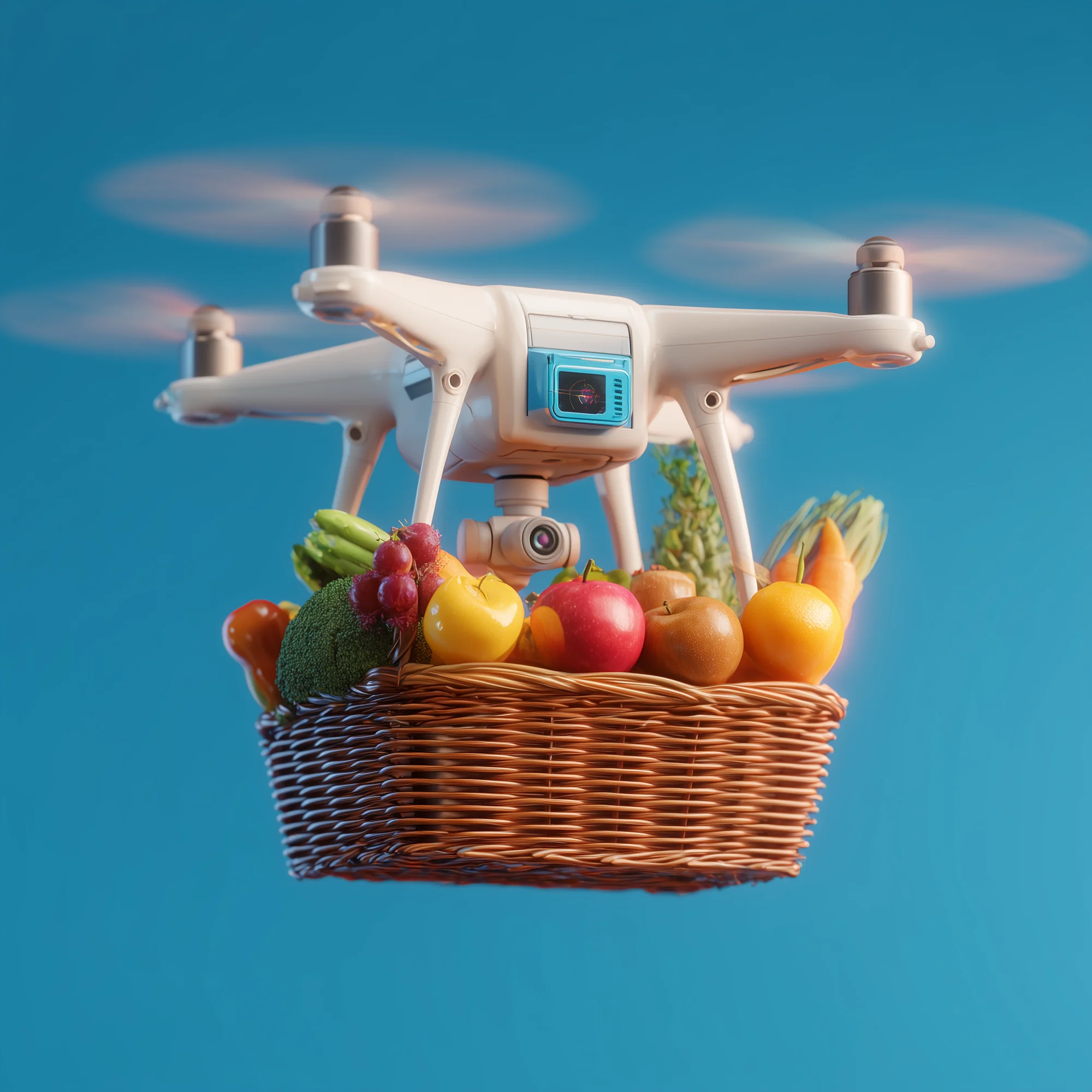
Researchers recently conducted a landmark investigation into what's called the "Food is Medicine" model: they enrolled participants at risk for cardiovascular disease and randomly assigned them to receive either regular deliveries of nutritious groceries paired with AI-enabled health coaching and support, or a control group that received only a cash stipend to purchase food on their own.[1]
The results were striking. The intervention group—those who received both groceries and AI-guided support—achieved more substantial short-term improvements in critical cardiovascular markers. Blood pressure dropped notably, and LDL ("bad") cholesterol levels improved significantly compared to the control group. These gains were most pronounced while participants actively received the food deliveries and coaching support. Even more encouraging, some benefits, particularly the blood pressure improvements, persisted roughly six months after the intervention ended.[1]
While the study did not show dramatic changes in body mass index or blood sugar levels, the cardiovascular improvements alone represent meaningful clinical progress and underscore a fundamental finding: making healthy food readily accessible—especially when combined with personalized guidance and ongoing support—can drive significant improvements in cardiovascular risk factors.
Why AI Health Coaching Matters
The inclusion of AI-powered health coaching in this study reflects a broader shift in how modern medicine approaches lifestyle change. AI health coaching platforms deliver real-time, personalized feedback and motivation to users. Recent randomized trials demonstrate that AI-led interventions match or even surpass human-led programs for core health outcomes including weight reduction, blood sugar control, and sustainable habit development. These digital coaches help users:
- Make smarter food choices through real-time scanning and meal analysis
- Build and maintain healthy movement and sleep routines
- Adhere to evidence-based dietary patterns (such as DASH or Mediterranean diets) in everyday life
A key advantage: AI health coaches are available 24/7, dramatically more scalable than traditional one-on-one human coaching, and increasingly personalized through continuous data from wearables or direct user input. These tools work best as complements to—not replacements for—clinical care, but they excel at bridging gaps between appointments and keeping users motivated between medical visits.[2][3][4][5]
Who Benefits—and Why This Matters for Everyone
Historically, food delivery or personalized nutrition programs targeted only the highest-risk or already-diagnosed populations. This new study challenges that narrow view. The model itself—delivering healthy foods and support directly into the home—addresses fundamental barriers that affect millions: limited access to fresh, nutritious options; confusion about what constitutes a healthy diet; and the practical difficulty of maintaining healthier eating amid busy schedules and information overload. The findings from this AHA-presented research, along with supporting analyses from the association's "Health Care by Food" initiative, reveal:
- Diet quality and food security markedly improve for participants in food-as-medicine interventions, extending beyond clinical populations to broader groups.[6][7]
- When paired with digital or AI health coaching, adherence rates and success at achieving lifestyle changes improve further—often matching outcomes previously seen only with direct human coaching, but now achievable at scale.[4][5][8]
- Tangible clinical benefits emerge: lower blood pressure, improved cholesterol profiles, and higher quality-of-life ratings become achievable—particularly when the intervention and support are sustained over time.[3][9][1]
Challenges and the Path Forward
The researchers and the broader cardiovascular health community acknowledge important limitations and questions that remain:
- Sustainability matters: The most dramatic health improvements often diminish after food delivery or coaching ends. This suggests that recurring or long-term interventions—not one-time programs—likely yield lasting change.[1]
- Different outcomes respond differently: Cholesterol and blood pressure improved readily in this model, while weight and glucose control were less dramatically affected. This likely reflects that diet quality influences cardiovascular markers more directly than diet quantity alone.
- Larger, longer studies are needed: To establish precise cost effectiveness, optimal deployment strategies, and how best to tailor these programs for diverse racial, ethnic, and socioeconomic populations, the field requires more robust, multi-year research.[7][9][6]
The Takeaway: Practical, Scalable Health Improvements Are Here
The evidence from this AHA 2025 study and related research makes clear: healthy food delivery and AI-powered health coaching represent some of the most promising advances for improving public health in recent years. By narrowing the gap between health knowledge and real-world action—and by making nutritious choices the practical default at home—these approaches have genuine potential to shift the dial on chronic disease risk for diverse populations, not just the highest-risk groups.
Look for rapid expansion of both food-as-medicine programs and AI-driven health coaching in the coming years. As research continues to mature, their combined impact may become foundational to population-level health improvement strategies—worthy of robust support from clinicians, health systems, policymakers, and individuals committed to better health.[5][9][2][3][4]
Sources
- [1] At AHA meeting, CRISPR data gleamed but 'food as medicine ... https://www.statnews.com/2025/11/10/aha-food-as-medicine-lowered-blood-pressure/
-
- [2] Artificial Intelligence in Nutrition and Dietetics - PubMed Central - NIH https://pmc.ncbi.nlm.nih.gov/articles/PMC12563881/ [3] AI-Supported Coaching Program Improved T2D Outcomes https://consultqd.clevelandclinic.org/randomized-clinical-trial-demonstrates-ai-supported-coaching-program-improved-outcomes-in-patients-with-t2d
- [4] AI Program Matches Human Coaching in Diabetes Prevention - EMJ https://www.emjreviews.com/general-healthcare/news/ai-program-matches-human-coaching-in-diabetes-prevention/
- [5] An AI-Powered Lifestyle Intervention vs Human Coaching in the ... https://pubmed.ncbi.nlm.nih.gov/41144242/
- [6] 'Food is medicine' shows potential for improving diet quality and ... https://newsroom.heart.org/news/food-is-medicine-shows-potential-for-improving-diet-quality-and-food-security
- [7] A Systematic Review of “Food Is Medicine” Randomized Controlled ... https://www.ahajournals.org/doi/10.1161/CIR.0000000000001343
- [8] Systematic review exploring human, AI, and hybrid health coaching ... https://www.frontiersin.org/journals/digital-health/articles/10.3389/fdgth.2025.1536416/full
- [9] FOOD-HF: Can Food-as-Medicine Work After Discharge? Exploring ... https://www.acc.org/latest-in-cardiology/articles/2025/11/03/16/19/mon-1115am-foodhf-aha-2025
Medical Disclaimer
Vedalife provides nutrition guidance, supplement tracking, drug-interaction alerts, fitness planning, and health insights for general wellness purposes only — not medical advice or treatment. Always consult your physician or registered dietitian before making changes to your diet, supplements, or exercise routine. This service does not diagnose, treat, cure, or prevent any disease.
For more information, please read our Terms of Service and Privacy Policy.